The Hidden Cost of Copper
THE SOCIAL AND ECOLOGICAL CONSEQUENCES OF MINING FOR SUSTAINABILITY

Model of the face-centered cubic crystal structure of copper showing one unit cell (Nielsen, n.d.).
INTRODUCTION
Copper has been deeply intertwined with energy production since the 1800s. Because of it’s incredible electrical and thermal conductivity, it was a foundational driver behind the Industrial Revolution and has since become a critical part of electrical wiring, generators, transmission lines, power grids and more recently renewable energy and electric vehicles. Today, many argue that it is our key to a sustainable future.
But can a system that depends on a finite resource–one that often destroys ecosystems–truly be sustainable? Or are we, once again, relying on familiar methods instead of pursuing more innovative and less harmful solutions, just as we did in our reliance on fossil fuels?
WHAT IS COPPER?
Copper is a chemical element and one of the oldest metals used by humans, with evidence of its use dating back more than 10,000 years. It is antimicrobial, durable, corrosion-resistant, ductile, and an excellent conductor of electricity and heat. Its versatility is reflected in its wide range of applications, from cookware to electronics and plumbing.
Copper is also infinitely recyclable without any loss of performance. It is estimated that approximately 80% of all copper ever mined is still in use today. Additionally, about 30% of global copper demand is met through recycled sources (Copper Development Association Inc., n.d.). This figure reflects copper’s ongoing recyclability, though it does not fully account for recycling’s role in meeting increasing future demand.
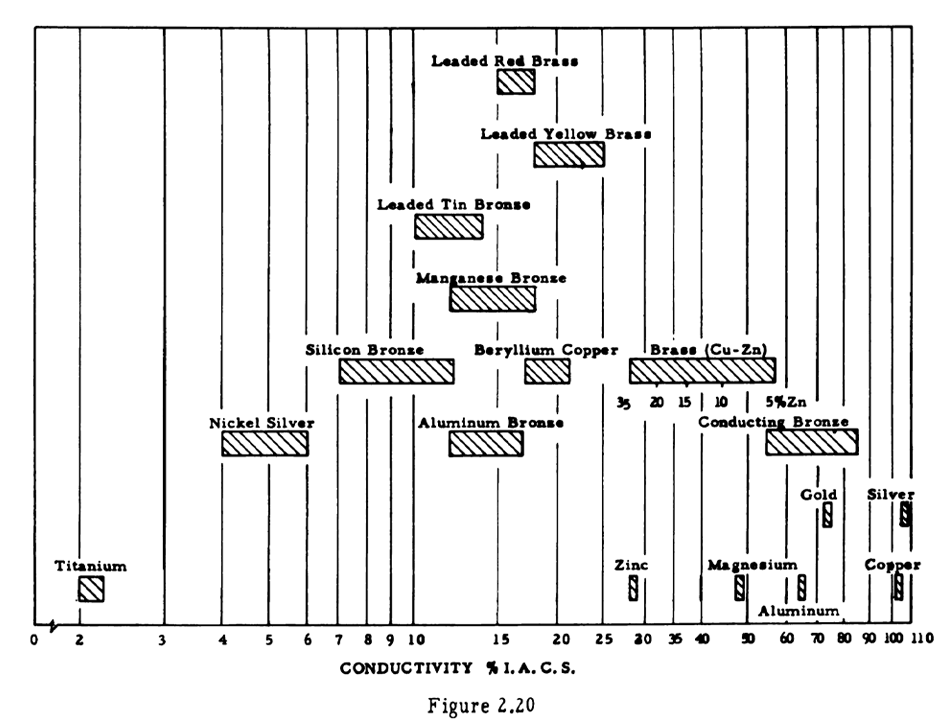
Electrical conductivity rating of various metals and alloys (Flinn, 1961).
ROLE IN RENEWABLE ENERGY
Copper has an electrical conductivity rating of 100%, while other metals such as aluminum reach only about 61%. This high conductivity allows for the use of smaller conductors, which saves space, reduces weight, and lowers overall costs (International Copper Association, n.d.).
In combination with its other properties, this has made copper critical for renewable energy systems such as wind turbines, solar thermal plants, and electric vehicles (EVs) (International Copper Study Group, 2020). Electric vehicles, widely viewed as a solution to climate change, require two to four times more copper than conventional internal combustion engine vehicles, using approximately 84 to 183 pounds per vehicle. This estimate does not account for the additional copper required for charging infrastructure, with the number of charging stations projected to reach around five million in the next decade. As a result, demand for copper is expected to increase significantly (Copper Development Association Inc., n.d.).
Copper’s corrosion-resistant properties also make it an essential component in lithium-ion batteries. These batteries have become dominant due to their high energy density, long lifespan, and superior performance compared to alternatives. Because energy storage is critical for the effective deployment of renewable energy, rising demand for renewable energy systems will likely drive increased demand for lithium-ion batteries—and, in turn, for copper (International Copper Association, 2021).
Copper Content by Generation Source
Copper Content (Electric Vehicles versus Internal Combustion Engines)
EXTRACTION & TOXICITY
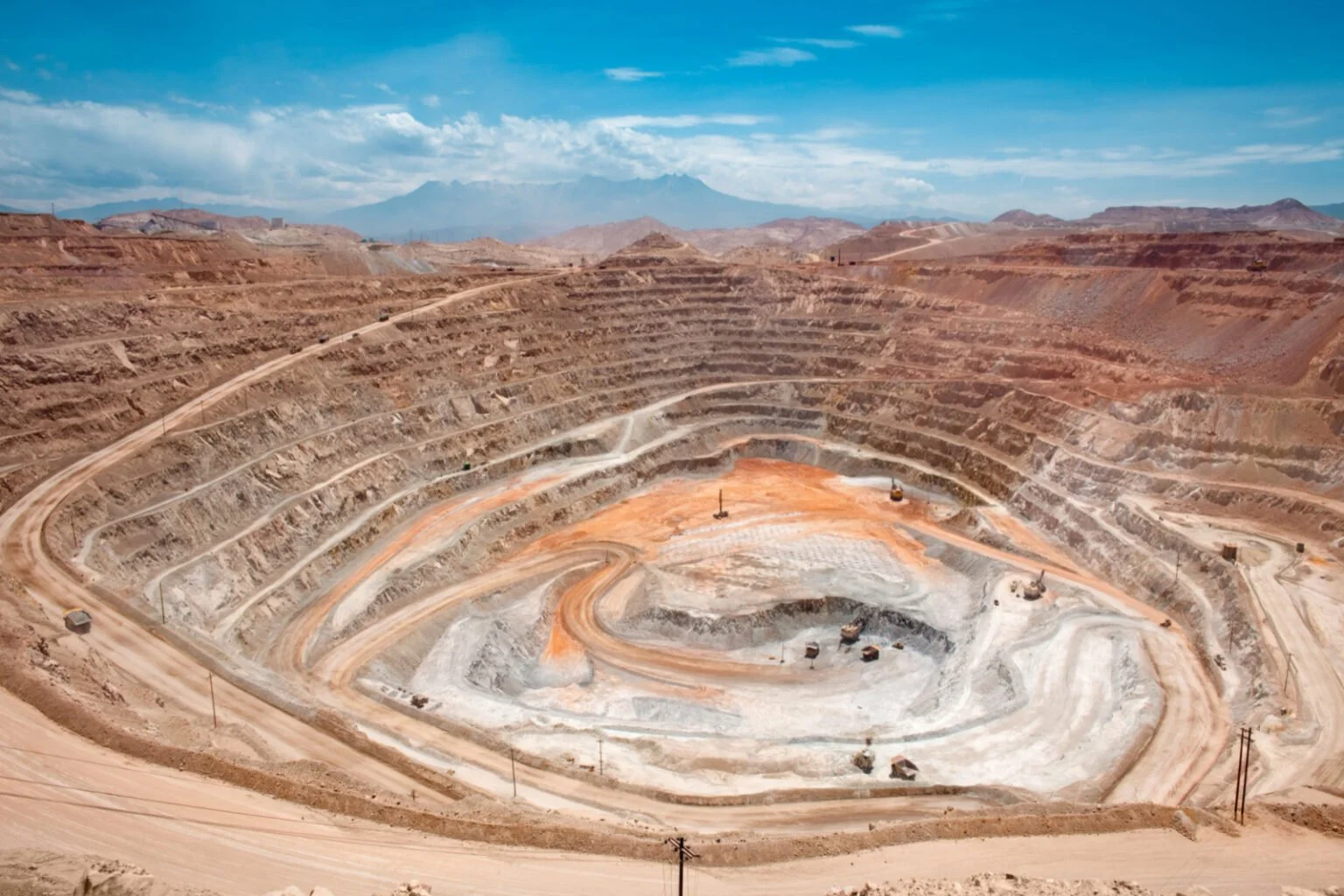
A common method of extracting copper ore is open-pit mining, which involves removing large quantities of rock from the earth, often with the use of explosives. Holes are drilled into the rock and filled with explosives, which are then detonated to break it apart. The fragmented material is hauled by large vehicles to a processing site (University of Arizona Superfund Research Center, n.d.).
The process of separating the ore from the surrounding rock releases a variety of toxic chemicals, including mercury, lead, sulfuric acid, and PCBs (Montgomery, 2025). These substances can contaminate surrounding soil and water, posing serious risks to ecosystems and nearby communities.
ECOLOGICAL IMPACT
Open-pit copper mines can be nearly a mile in diameter and several thousand feet deep. Depending on location, deforestation may also be required to make the site accessible (Federal Metals, n.d.). In addition to this irreparable physical destruction of land, mining leads to significant loss of biodiversity and wildlife habitat. Recent studies show that copper mining has a greater impact on biodiversity than any other clean energy metal (ISS ESG, 2022).
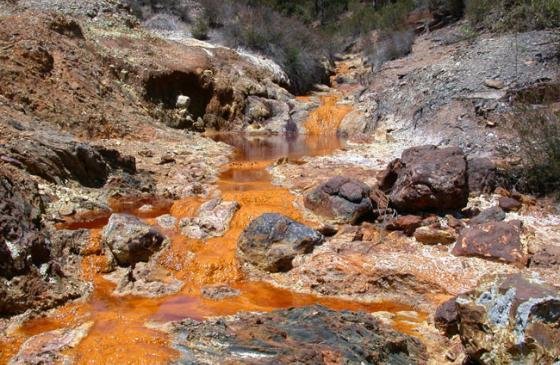
Extracting and processing sulfide-ore copper creates acid mine drainage. This method can contaminate local water resources for surrounding communities, in extreme cases destroying farmland, damaging aquatic systems, and rendering areas uninhabitable. Additional land is also required to store mine tailings, which introduces further environmental risks (ISS ESG, 2022). Fourteen of the sixteen (89%) copper mines in the United States are sulfide-ore copper mines. Thirteen out of the fourteen (92%) reported having water collection and treatment failures that made significant impact on the water quality (Garwin, 2015).
Regulatory oversight does not always ensure that decisions are based on scientific evidence. For example, in May 2016, the U.S. Fish and Wildlife Service approved a mine in southern Arizona. However, internal agency scientists had concluded that the project would cause irreparable harm to the already endangered jaguar, and their findings were later overridden at a higher level within the agency (Center for Biological Diversity, n.d.). These impacts raise important questions about whether a system that depends on such environmental costs can truly be considered sustainable.
ECONOMIC & SOCIAL IMPACT
The copper industry employs more than one million people and contributes billions of dollars to the global economy. Throughout history, copper has played a role in economic and societal progress and often serves as a backbone for surrounding communities (International Copper Association, n.d.).
However, mining projects also bring significant social and economic risks. Many copper mines are located in water-scarce regions—over half worldwide—leading to conflict over water use, particularly in agricultural areas and communities already facing water and air pollution (Riedl et al., 2026).
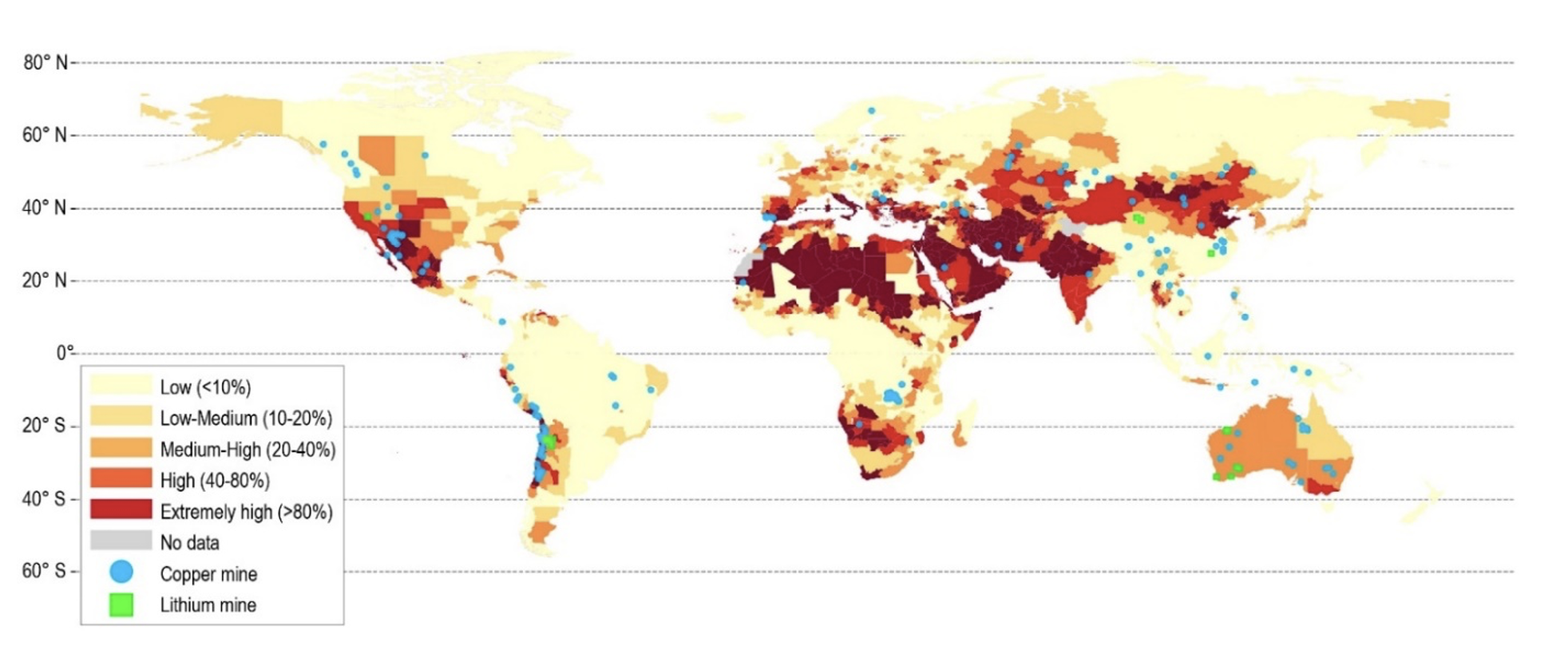
Over Half of Copper Mines Are Located in High Water Stress Areas (ISS ESG, 2022)
Mining can also create boom-and-bust cycles if a community becomes reliant on a single non-renewable industry. In smaller communities, a large mine and influx of workers can overwhelm local services, housing, roads, and infrastructure. Some studies suggest that mining has left certain communities worse off both economically and environmentally (Riedl et al., 2026). Increased traffic and pollution can also harm other industries that communities depend on, such as tourism and outdoor recreation. Additionally, many mines are operated by multinational corporations based outside the region. These operations do not necessarily generate long-term economic benefits for local communities, nor do they guarantee sustained investment in the area (Casella & Formenti, 2022).
While some companies prioritize corporate engagement, transparency, and community involvement, these practices are not legally required for mining projects to proceed. Tribal Nations and Native American communities are disproportionately affected, as a high percentage of mineral mines are located within 35 miles of reservations (Riedl et al., 2026).
ALTERNATIVES TO COPPER
The contrasting perspective of "just mine it" and "stop mining it" highlight the danger of narrow thinking when developing solutions for a sustainable future. Focusing on a single method does not address the broader challenges of copper mining or the transition to renewable energy.
While copper is currently essential for accelerating the shift to clean energy, alternative materials are emerging. Aluminum, for example, is lighter, cheaper, and more abundant than copper, though it is only about 60% as conductive. However, research conducted at the Pacific Northwest National Laboratory is exploring ways to improved aluminum's electrical conductivity through advanced modeling and material design, making it a poetentially viable alternative for applications such as power grids and vehicles (Freibott, 2022).
In addition to advances in aluminum, recent breakthroughs in carbon nanotubes show further promise. These materials can now be spun into conductive fibers, films, and wires, offering a potential alternative to traditional metals. This emerging material may allow for the development of lighter, more efficient, and less resource-intensive energy systems, supporting increasing energy demands while minimizing the environmental impact associated with copper mining (“Carbon Nanotube Material Replaces Copper,” 2025).
CURBING CONSUMPTION
It would be negligent not to address the role of consumption and how it contributes to tensions within the energy sector. According to the International Energy Agency (IEA), global electricity demand grew by approximately 3% in 2025, a rate significantly higher than overall energy demand growth. While demand for electric vehicles increased by 38% and data centers by 17%, the largest sources of electricity consumption remain the industrial sector, household appliances, and commercial buildings (NewsBytes, 2026).
Emerging and developing economies accounted for roughly 80% of this growth, driven in part by rising standards of living worldwide (SolarQuarter, 2025). In this sense, increased consumption is not inherently negative—it often reflects improved access to energy and higher quality of life. However, it also places additional strain on energy systems. At the same time, rising global temperatures are increasing demand for cooling, further accelerating electricity use.
Taken together, these trends suggest that energy demand is being driven not only by technological shifts, but by broader patterns of consumption. From everyday purchases, to the expansion of artificial intelligence, to the way buildings are designed and used, multiple aspects of modern life are converging to increase energy use—and, in turn, demand for materials such as copper.
SUMMARY
I became interested in this topic while researching a proposed mine in the Santa Rita Mountains outside of Tucson, Arizona. As I explored copper and its role in modern energy systems, I was struck by the polarization of opinions surrounding copper mining, as well as a lack of long-term perspective in some discussions. Many sources emphasize that, because copper is recyclable, it represents an ideal solution for supporting renewable energy systems. While this is partly true, such claims often overlook a critical factor: as global standards of living continue to rise, energy demand will increase as well.
It is overly optimistic to assume that recycling alone will be sufficient to meet this growing demand. Additionally, discussions that frame copper as a central solution rarely address ongoing innovations in the energy sector that could reduce reliance on copper altogether. If the broader goal is to reduce greenhouse gas emissions and create a more sustainable future, it is important to pursue a range of solutions rather than relying too heavily on a single material.
Focusing solely on methods—such as extracting more copper—risks perpetuating the same cycles of environmental and social harm. In contrast, a focus on underlying principles opens the door to alternatives that are not only efficient, but truly sustainable. As renewable energy demand grows, replacing one resource with another is not enough. Lasting solutions will require rethinking both energy systems, the materials they depend on and reduction in consumption.
Sources
Carbon nanotube material replaces copper, accelerating global electrification infrastructure. (2025, December 25). Sustainability Directory. https://news.sustainability-directory.com/innovation/carbon-nanotube-material-replaces-copper-accelerating-global-electrification-infrastructure/
Casella, B., & Formenti, L. (2022). Mining foreign direct investments and local technological spillovers. In A. Daly, D. Humphreys, J. Raffo, & G. Valacchi (Eds.), Global challenges for innovation in mining industries (pp. 52–87). Cambridge University Press.
Copper Development Association Inc. (n.d.). Electric vehicles. https://www.copper.org/environment/sustainable-energy/electric-vehicles/
Center for Biological Diversity. (n.d.). Rosemont copper mine.
https://www.biologicaldiversity.org/campaigns/rosemont/
Federal Metals. (n.d.). How does copper mining affect the environment? https://federalmetals.ca/how-does-copper-mining-affect-the-environment/
Freibott, A. (2022, June 29). Cooking up a conductive alternative to copper with aluminum. Pacific Northwest National Laboratory. https://www.pnnl.gov/news-media/cooking-conductive-alternative-copper-aluminum
Garwin, R. (2015, May 8). Science desk: How sulfide-ore copper mines pollute. Save the Boundary Waters. https://www.savetheboundarywaters.org/updates/science-desk-how-sulfide-ore-copper-mines-pollute
International Copper Association. (n.d.). Copper attributes and alloys. https://internationalcopper.org/sustainable-copper/about-copper/copper-attributes-and-alloys/
International Copper Association. (n.d.). Society & economy. https://internationalcopper.org/policy-focus/society-economy/
International Copper Study Group. (2020). The world copper factbook 2020.
International Energy Agency. (2024). Batteries and secure energy transitions: Executive summary. https://www.iea.org/reports/batteries-and-secure-energy-transitions/executive-summary
ISS ESG. (2022, November 24). Copper or robber: Supply risks and ESG issues. ISS Governance. https://insights.issgovernance.com/posts/copper-or-robber-supply-risks-and-esg-issues
Montgomery, E. (2025, February 21). How copper mines pollute. Environment America Research & Policy Center. https://environmentamerica.org/center/articles/how-copper-mines-pollute/
NewsBytes. (2026, April 23). EVs, AI data centers push global electricity demand higher. https://www.newsbytesapp.com/news/science/evs-ai-data-centers-push-global-electricity-demand-higher/story
Riedl, D., Saha, D., & Balleny, L. (2026, January 5). A new era of U.S. mineral mining must put communities first. World Resources Institute. https://www.wri.org/insights/us-critical-mineral-mining-community-impacts?utm_source=chatgpt.com
University of Arizona Superfund Research Center. (n.d.). Copper mining and processing: Processing copper ores. https://superfund.arizona.edu/resources/learning-modules-english/copper-mining-and-processing/processing-copper-ores
